
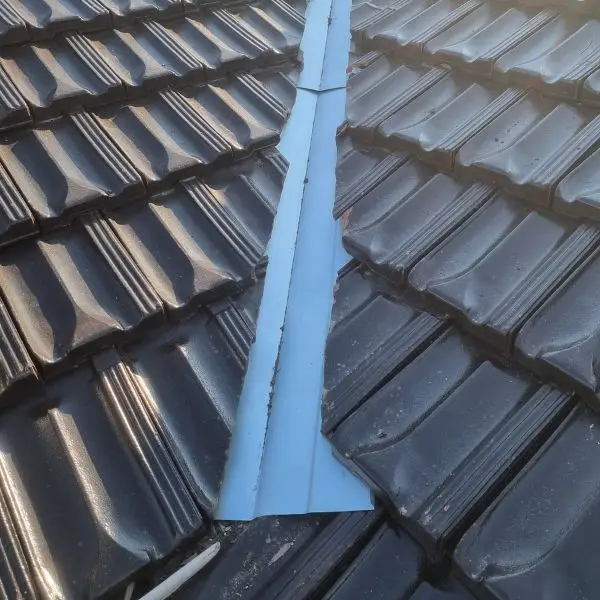
Why flashings fail — and what happens when they do
Roof flashings are the thin strips of lead, aluminium or steel that seal the junction between the tile field and a wall, chimney, vent or change of direction. They're installed to stop water from running down behind the tiles at these junctions — and they work until they don't. Older lead flashings on the Victorian and Edwardian homes of Brunswick, Northcote and Coburg have often been in place for 50–80 years. Lead is remarkably durable, but it eventually fatigue-cracks from years of thermal cycling. Aluminium flashings on mid-century homes can corrode. The mastic sealants used to bed flashings dry out and crack within 15–20 years. And builder-grade flashings on newer estates in Craigieburn and Mill Park are frequently installed too short or at the wrong angle. The result in every case is the same: water bypasses the tile plane and enters the structure.